
Celiac disease & Gluten Sensitivities
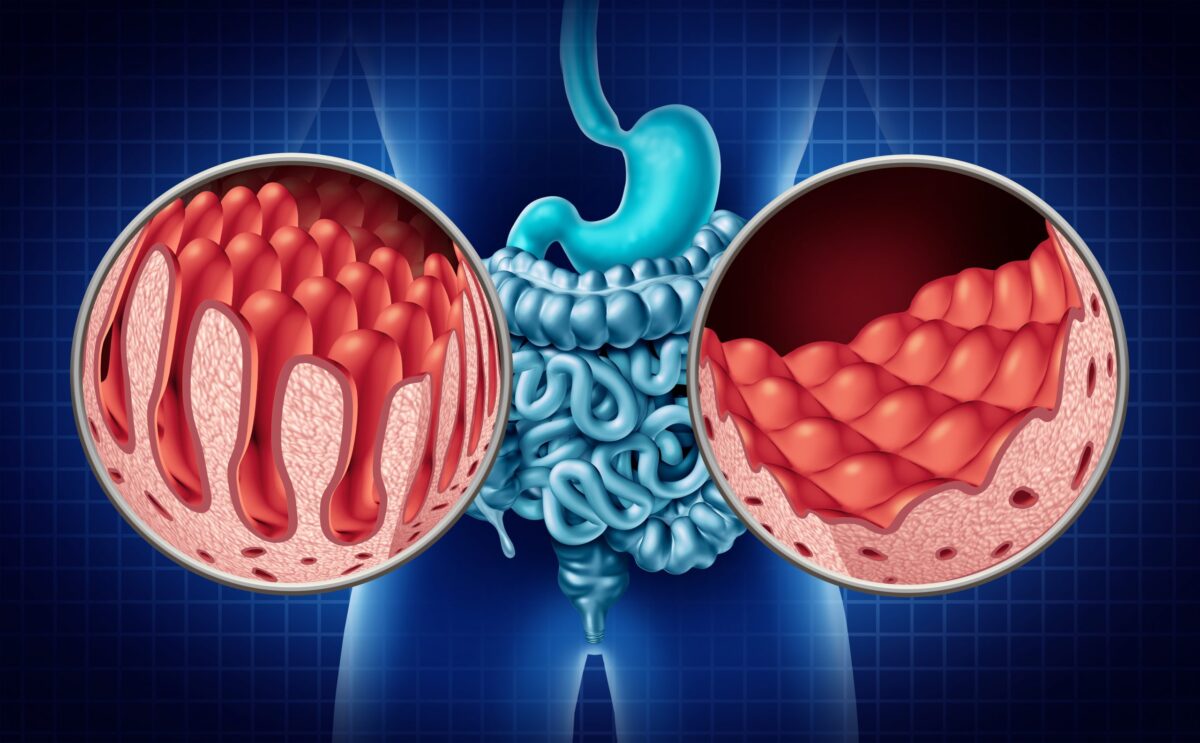
Celiac disease is a digestive condition triggered by consumption of the protein gluten, which is primarily found in foods containing wheat, barley, rye and oats. People with celiac disease who eat foods containing gluten experience an immune reaction in their small intestine, causing damage to the inner surface of the small intestine and an inability to absorb certain nutrients.

Normally, the small intestine is lined with tiny, hair –like projections called villi. Villi serve to absorb vitamins, minerals and other nutrients from the food we eat. In celiac disease, the body develops an inflammatory reaction towards gluten proteins which leads to damage to the villi. Without prominent villi, the inner surface of the small intestine becomes less efficient to absorb nutrients necessary for health and growth. Instead, nutrients such as fat, protein, vitamins and minerals are malabsorbed. This leads to nutrient deficiencies and variety of gastrointestinal issues.
The symptoms of celiac disease can be different from person to person. This makes diagnosis difficult.
Sometimes patients with Celiac disease may have no apparent symptoms, which is called latent celiac disease. Depending on the degree of reaction to gluten, different manifestations of celiac disease are possible.
Severe celiac disease leads to the characteristic symptoms of pale, loose, voluminous, malodorous and greasy stool, abdominal pain and cramping, bloating with abdominal distension, mouth ulcers, weight loss, failure to gain weight. As the bowel becomes more damaged a degree of lactose intolerance may develop. People with milder celiac disease may have symptoms that are much more subtle and occur in other organs rather than the bowel itself. Many adults with subtle disease only have fatigue or anemia.
Celiac disease leads to an increased risk of both adenocarcinoma (small intestine cancer) and lymphoma of the small bowel. IgA deficiency is present in 2.3% of patients with celiac disease, and in turn, this condition features a tenfold increased risk of celiac disease.
Another possible symptom of celiac disease is a rash called dermatitis herpetiformis. This is a condition where the patient can have an itchy, blistering skin disease that stems from underlying autoimmune process. The rash usually occurs on the torso, scalp and buttocks. This rash resolves with a gluten-free diet.
NAET treatments for celiac disease:-
Before beginning the treatment, patient must have done the following laboratory tests.
- Serum for IgE and IgG specific
- Endomysial antibody
- Gliadin antibody
- Gluten IgE sp and IgG
- T-Transglutaminase LgA
- t-Transglutaminase IgG
All allergens must be tested and treated one at a time and check any combinations and must be treated and cleared 100%.Any emotions associated with it also must be checked and treated.
Patients must avoid foods with gluten until they become asymptomatic as well as negative on the blood test.
It is really hard work on the part of the NAET practitioner as well as patient. But you will be rewarded with good health.

NAET is the best way to clear allergies and get back to normal health. NAET treatments help to improve your immune system and help fight many diseases.